

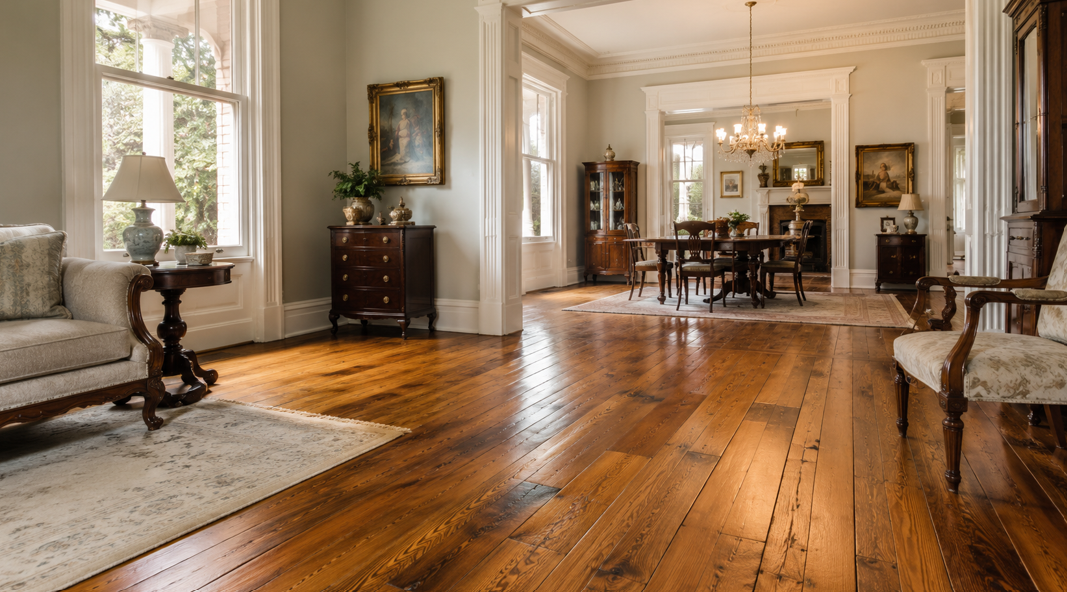
Preserving Character While Planning for Everyday Life
Historic homes have a presence that newer properties often can’t duplicate. Original millwork, tall windows, detailed trim, high ceilings, and distinctive room layouts give these houses a sense of craftsmanship and story. Flooring plays a major role in that character, so choosing new hardwood for an older Selma home calls for more than picking a color from a sample board.
The right floor needs to respect the home’s architecture while meeting modern expectations for durability, comfort, and maintenance. It may also need to coordinate with original woodwork, connect rooms with different floor heights, and perform well in Alabama’s changing indoor humidity.
At Prattville Carpet, our family-owned team helps Alabama homeowners compare flooring options with personal guidance, quality products, and professional installation. For a historic home, that process begins with understanding the property itself.
This guide covers hardwood choices that often suit historic Selma homes, how to balance authenticity with practicality, and what to consider before installation.
Start With the Home’s Existing Architectural Style
A hardwood floor feels most natural when it complements the house rather than competing with it. Before choosing a species, plank width, stain, or finish, study the details already present.
Consider:
Baseboards, door casings, and stair parts
Interior doors, built-ins, and fireplace surrounds
Existing wood floors in nearby rooms
Room size, ceiling height, and natural light
The style of later additions or renovations
A highly rustic floor may feel out of place in a refined room with delicate trim, while an ultra-sleek surface may look disconnected from hand-crafted features.
Historic homes also evolve. A house may include original rooms, later updates, and a newer kitchen addition. The goal does not need to be a perfect museum-style match. A thoughtful hardwood choice can create continuity while supporting the way a family lives today.
Timeless natural tones, balanced grain patterns, and moderate plank widths often provide more flexibility than finishes tied closely to a passing trend.
Solid or Engineered Hardwood: Which Works Better?
Both solid and engineered hardwood can be appropriate for historic homes, but they are built differently.
Solid Hardwood
Solid hardwood is milled from one piece of wood. It offers the authenticity many homeowners want in an older property and may be sanded and refinished several times, depending on plank thickness and condition.
It often works well when the subfloor supports nail-down installation, the room is above grade, and long-term refinishing potential is important. Solid wood naturally expands and contracts with moisture changes, so acclimation, expansion spacing, and steady indoor conditions matter.
Engineered Hardwood
Engineered hardwood has a real wood surface over a layered core. Its construction provides greater dimensional stability, which can be useful when humidity changes, concrete subfloors, wider planks, or lower-profile installation affect the project.
Quality varies. The thickness of the real wood wear layer influences whether the floor can be refinished later. Homeowners interested in future restoration can ask how many times a product may be renewed.
Neither construction is automatically better. The right choice depends on the home, room, subfloor, and installation plan.
Hardwood Species That Suit Historic Selma Homes
Species affects appearance, hardness, grain movement, color, and daily performance. Historic homes often benefit from woods with familiar, enduring character.
White Oak
White oak is one of the most versatile choices for an older home. Its grain is visible without feeling overly busy, and its natural color works with many finishes. It suits formal and casual rooms and performs well in active spaces such as hallways, family rooms, and dining areas.
Red Oak
Red oak has a more pronounced grain and warmer undertones. It can feel especially appropriate where existing floors, stairs, or trim share similar characteristics. Because its natural pink or reddish tones influence the final color, review a large finished sample in the room.
Hickory
Hickory offers strong color variation and active grain. It can bring warmth and individuality to a Southern, farmhouse, or cottage-style interior. In highly formal rooms, a calmer species may create a more balanced result.
Maple
Maple has a smoother, quieter grain. It can work well when homeowners want a cleaner look without losing the warmth of real wood. Natural or lightly toned finishes often suit maple better than dark stains.
Cherry or Walnut
Cherry and walnut bring rich color and distinctive character to libraries, dining rooms, offices, and formal sitting rooms. They are generally softer than oak or hickory, so they may show dents or wear sooner in busy areas. Some homeowners value the patina that develops over time.
Choosing the Right Plank Width and Length
Plank proportions affect how a room feels and whether the floor appears connected to the home’s architecture.
Narrow strips can create a traditional appearance and may coordinate with original floors in older houses. They introduce more seams, adding rhythm and detail.
Medium-width planks offer a balanced look that works across many historic interiors. They feel classic without becoming overly formal and can transition smoothly between older and newer parts of the property.
Wide planks highlight grain and can suit rooms with tall ceilings, large windows, or generous proportions. Wider solid boards may show seasonal movement more clearly, while engineered construction can provide added stability.
Plank length also matters. Longer boards create fewer end joints and a calmer visual flow. Varied lengths can feel natural and less repetitive, which often complements the craftsmanship of a historic home.
Color and Finish Choices That Feel Timeless
The most successful floor color usually has enough warmth to feel established without overwhelming the room.
Natural and Lightly Warm Finishes
Natural oak, honeyed neutrals, and soft brown tones reveal the grain and coordinate with many wall colors. They also adapt well as furnishings and paint choices change. Lighter floors can brighten dim rooms, although heavily whitewashed finishes may feel too contemporary in some historic interiors.
Medium and Deep Brown Tones
Medium brown adds depth while preserving visible grain. It often works well with painted millwork, darker trim, antique furniture, and modern upholstery. It can also make dust and small marks less noticeable than a very dark floor.
Deep brown can create elegant contrast in formal spaces, but it tends to show pet hair, footprints, and surface marks more readily. Review the room’s lighting and maintenance needs before committing to a dark stain.
Matte and Low-Sheen Finishes
A matte or low-sheen finish often feels at home in an older property. It reflects less light than a glossy surface, keeps the grain as the visual focus, and can disguise small scuffs or footprints.
Matching New Hardwood to Existing Floors
Many historic homes already contain original flooring. New hardwood may need to meet an existing floor at a doorway, connect to a restored staircase, or continue into a later addition.
An exact match is not always possible. Wood changes color with age, sunlight, finish wear, and previous refinishing. Even the same species can look different when milled or finished at another time.
A professional can compare:
Species and grain pattern
Plank width and thickness
Stain color and finish sheen
Surface texture
Height at transitions
Direction of installation
Sometimes a close match is the right goal. In other cases, a deliberate transition looks more polished than a near-match that remains visibly different. A threshold, border, or change in plank direction can define the shift between spaces.
Homeowners can browse our selection of hardwood flooring to compare species, colors, textures, and plank formats that may complement existing architectural details.
Understanding Subfloors in an Older Home
The visible floor is only part of the project. Historic homes can have subfloors that reflect decades of repairs, settlement, additions, or previous floor coverings.
Before installation, the subfloor may need to be checked for:
Flatness and stability
Moisture
Loose or squeaking areas
Height differences
Old adhesives or fasteners
Compatibility with the installation method
An older house does not automatically have a poor subfloor. It simply deserves careful evaluation. Covering an uneven or unstable surface can affect how the new hardwood feels and performs.
Floor height also matters. New material may need to align with tile, thresholds, stairs, exterior doors, or built-in cabinetry. These details are easier to plan before flooring is ordered.
When concerns extend beyond normal floor preparation, an appropriate building professional may need to review them.
Moisture and Humidity Considerations
Selma’s warm, humid conditions make indoor moisture management an important part of hardwood planning. Wood responds naturally to its surroundings, so some seasonal movement is expected.
Helpful practices include:
Keeping indoor temperature and humidity reasonably consistent
Acclimating flooring according to manufacturer instructions
Checking subfloor moisture when required
Leaving correct expansion space
Addressing plumbing leaks before installation
Using suitable moisture protection over concrete or crawlspace areas
Engineered hardwood may provide added stability in certain rooms, but it still needs correct preparation and installation. Product choice, moisture management, and professional workmanship need to work together.
Selecting Hardwood for Different Rooms
The same hardwood can create continuity throughout a home, but each space has different traffic and maintenance needs.
Living Rooms and Parlors
These rooms often showcase the home’s architecture. White oak, red oak, cherry, or walnut can all work depending on traffic and design goals. A medium-width plank with a low-sheen finish can feel refined without appearing overly new.
Dining Rooms and Bedrooms
Dining rooms benefit from durable finishes and protection beneath chairs. Medium tones pair well with both traditional furniture and updated décor.
Bedrooms receive less traffic, allowing more freedom in species and finish selection. Softer woods may be suitable when color and character matter more than maximum dent resistance.
Hallways and Stairs
These areas see concentrated traffic. Durable species, quality finishes, and precise installation are especially important. Where new flooring meets an original staircase, color, thickness, nosing, and trim need careful coordination.
Kitchens
Hardwood can work in kitchens when the product is approved for the setting and spills are cleaned promptly. Mats near sinks and exterior doors add protection. Households expecting frequent water exposure may want to compare hardwood with other flooring categories before deciding.
Refinishing Existing Floors or Installing New Hardwood
Original hardwood is often worth evaluating before removal. Refinishing may restore beauty when the planks are stable and have enough usable material above the tongue.
Refinishing may be appropriate when:
Damage is mainly within the finish
The floor has widespread scratches or dullness
Most boards remain secure
A different stain color is desired
The floor can tolerate another sanding
Replacement may be more practical when large areas are missing, boards are severely damaged, movement is extensive, or previous sanding has left limited thickness.
Some projects combine both approaches. Original flooring may be restored in formal rooms while compatible new hardwood is installed in an addition or heavily altered space. A careful assessment helps preserve valuable material without keeping a floor that can no longer perform reliably.
Why Professional Installation Matters
Historic homes often include details that make installation more specialized. Walls may not be perfectly square, transitions may vary in height, and original trim may be difficult to replace.
Professional installation can help with:
Accurate measurement
Subfloor assessment
Product acclimation
Balanced plank layout
Expansion spacing
Transitions between rooms
Integration with stairs and trim
Manufacturer-compliant fastening or adhesive
A thoughtful installation plan can also protect architectural features. Careful trim handling, clean cuts around built-ins, and the right starting line make a visible difference.
An in-home estimate gives homeowners a clearer understanding of preparation, timing, and project expectations before work begins.
Practical Care for Long-Lasting Hardwood
Hardwood does not require an elaborate routine. Consistent, gentle care helps preserve the finish and the character of the wood.
Sweep or vacuum with a hard-floor attachment.
Wipe spills promptly.
Use a cleaner approved for the finish.
Place mats at exterior doors.
Add felt pads beneath furniture.
Lift rather than drag heavy items.
Keep pet nails maintained.
Reduce intense, uneven sunlight with curtains or shades.
Maintain steady indoor climate conditions.
Avoid excessive water, abrasive pads, steam cleaning, and unapproved waxes. Area rugs can protect busy zones, but their pads need to be suitable for hardwood.
Real wood gradually changes in color and may develop small signs of use. In a historic home, that natural aging can add depth when the floor is maintained properly.
Create a Floor That Belongs in the Home
The best hardwood flooring for a historic Selma home is not defined by one species, one stain, or one plank width. It is the floor that respects the property’s character, suits the room conditions, and supports everyday life.
White oak and red oak offer versatile beauty. Hickory adds movement, maple provides a quieter grain, and cherry or walnut can create richness in carefully chosen spaces. Solid hardwood may appeal to homeowners who value traditional construction and refinishing potential, while engineered hardwood offers added stability and installation flexibility.
The final decision needs to account for existing woodwork, adjoining floors, subfloor conditions, indoor humidity, traffic, pets, maintenance, and long-term plans for the home.
Prattville Carpet brings more than 75 years of combined flooring experience to each project. Our knowledgeable consultants help homeowners compare quality materials, and our in-house installation teams work to complete each floor with care.
Ready to choose hardwood that complements your historic Selma home? Reach out to us for personalized guidance and a professional in-home estimate.


