

Looking Beyond the Upfront Price
When homeowners compare new flooring, the first number they usually notice is the purchase price. That makes sense, but it does not tell the whole story.
For Pelham, AL families, flooring also needs to handle daily spills, muddy shoes, pets, humidity, kitchen messes, bathroom splashes, and the occasional unexpected leak. A floor that costs less at the beginning can become more expensive if moisture damage leads to repairs or early replacement. That is where waterproof flooring can create value.
At Prattville Carpet, homeowners can compare flooring choices based on more than appearance alone. The right surface needs to fit the room, the household, and the way the home is used every day.
Waterproof flooring is not automatically the lowest-cost option, and no flooring product can prevent every type of water-related damage. However, a well-chosen waterproof floor can reduce some of the costs associated with moisture exposure, maintenance, and premature replacement.
So, how much can it really save? The answer depends on the product, room, installation, and what would otherwise happen if moisture reached a less water-resistant floor. Instead of promising a single dollar figure, it is more useful to break down where those savings can come from.
What “Waterproof Flooring” Really Means
The term waterproof flooring generally refers to flooring products designed so the flooring material itself can resist water exposure without the type of swelling or permanent damage seen in many moisture-sensitive materials.
Luxury vinyl plank and other waterproof vinyl products are common examples. Some newer laminate products also provide enhanced water protection, although product claims and warranties vary.
That distinction matters.
Waterproof Does Not Mean the Entire Room Is Waterproof
A waterproof floor surface does not turn the whole room into a waterproof system.
Water can still reach:
Baseboards
Drywall
Cabinets
Subfloors
Wall cavities
Areas around plumbing fixtures
If a major leak occurs, those parts of the home may still need attention.
The value of waterproof flooring is more specific: the flooring itself may be better able to withstand spills and surface moisture that could damage other flooring materials.
Product Specifications Still Matter
Not every product labeled for water protection performs exactly the same way. Homeowners benefit from checking manufacturer instructions, warranty terms, approved rooms, cleaning recommendations, and installation requirements.
When comparing waterproof flooring, focus on the full product specifications rather than the label alone.
Savings Area 1: Reducing the Risk of Moisture-Related Floor Replacement
One of the biggest potential savings comes from avoiding premature replacement after water exposure.
Why Moisture Damage Can Become Expensive
Some flooring materials can react strongly when water reaches seams, edges, or the core. Depending on the product, moisture can contribute to swelling, warping, staining, delamination, or other permanent changes.
Once that damage occurs, drying the surface may not restore the floor.
Replacement can involve more than buying new material. Homeowners may also need to pay for:
Removal of damaged flooring
Disposal
New flooring material
Installation labor
New trim or transitions
Subfloor preparation
Furniture moving
Additional repairs if moisture spread beyond the floor
That means a relatively small water incident can create a much larger project.
How Waterproof Flooring Changes the Equation
A properly selected waterproof floor may withstand routine spills and surface moisture without requiring replacement of the flooring itself.
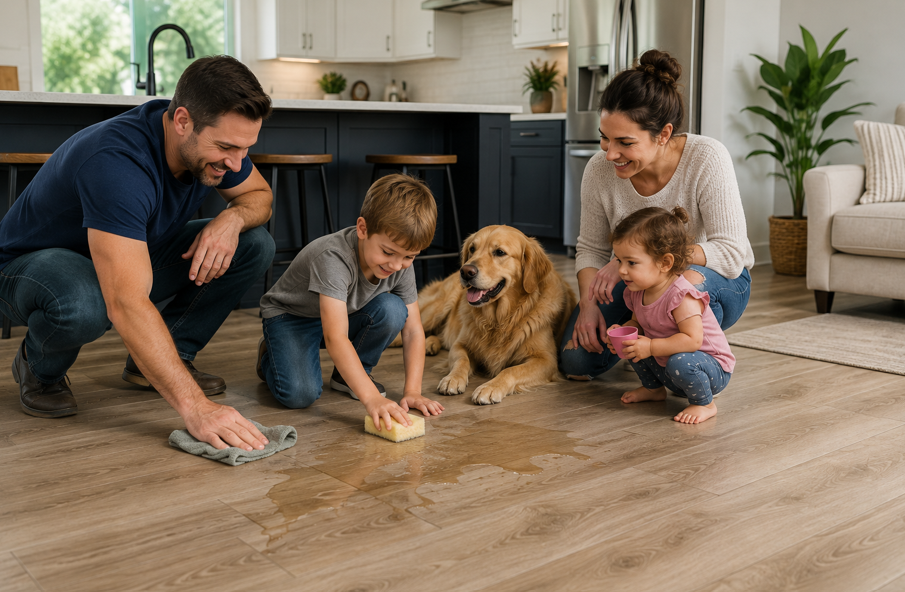
Think about common household events: a pet bowl spills overnight, a child knocks over a large drink, wet shoes sit near an entryway, or a refrigerator line drips before anyone notices.
The financial benefit is not that waterproof flooring eliminates all risk. It is that the flooring may be more forgiving when those ordinary accidents happen.
For busy families, avoiding even one unnecessary replacement can significantly improve the long-term value of the original purchase.
Savings Area 2: Lower Everyday Maintenance Costs
Another place waterproof flooring can save money is routine upkeep.
Many waterproof flooring products are designed for straightforward cleaning. Homeowners can usually remove dust, crumbs, pet hair, and everyday spills without specialized maintenance.
Fewer Specialty Care Requirements
Some flooring surfaces benefit from more specialized cleaners, periodic refinishing, sealing, or other maintenance over their lifetime.
Waterproof vinyl flooring typically does not require sanding or refinishing. Depending on the product, routine care may consist mainly of sweeping, vacuuming with an appropriate hard-floor setting, and damp cleaning using approved products.
That can reduce the need for:
Refinishing services
Specialty surface treatments
Frequent sealing
More involved restoration work
The savings from any single cleaning session may be small, but maintenance adds up over years of ownership.
Time Has Value Too
Cost is not only about invoices.
A floor that is simple to clean can save homeowners time throughout the week. For families balancing work, school, pets, and household routines, easy maintenance can be a meaningful practical benefit.
That does not mean the floor is maintenance-free. Following manufacturer care recommendations still matters. But a surface designed for everyday moisture exposure can make routine cleanup more convenient.
Savings Area 3: Better Performance in High-Spill Rooms
Waterproof flooring can be especially valuable in rooms where moisture is more likely to occur.
Kitchens
Kitchens deal with dropped drinks, food spills, wet cleaning, dishwasher drips, refrigerator water lines, and pet bowls.
A flooring material that handles surface moisture well can reduce the chance that a minor kitchen accident turns into a floor repair.
For households that cook frequently or have young children, this practical protection can be worth more than choosing a surface based on appearance alone.
Laundry Rooms
Laundry rooms are another logical location.
Water can come from wet clothing, utility sinks, washer connections, or small appliance leaks. Waterproof flooring does not protect the entire room from plumbing failures, but it can provide a more resilient surface for normal splashes and drips.
Bathrooms
Bathrooms regularly deal with wet feet, splashes, and changing humidity.
The exact flooring product still needs to be approved for the room and installed according to manufacturer instructions. When it is, waterproof flooring can offer a comfortable alternative to harder surfaces while providing useful moisture protection.
Entryways and Mudroom Areas
Rainy days, muddy shoes, wet umbrellas, and pets coming in from outside all bring water to entry areas.
Pelham homes can benefit from flooring that lets families clean up those messes without worrying as much about immediate surface damage.
Savings Area 4: Avoiding the “Replace It Again” Cycle
The lowest initial price does not always create the lowest long-term cost.
Imagine two homeowners updating similar rooms.
One chooses a floor mainly because of the upfront price. The other spends more on a product better suited to moisture, traffic, and pets.
If the first floor needs replacement much sooner because it was not matched well to the room, the original savings can disappear.
Think in Terms of Cost Per Year
A useful way to evaluate flooring is to think about how long you reasonably expect it to serve the household.
For example, a product that costs more initially but performs well for a longer period may provide better value than one that needs early replacement.
The exact lifespan of any floor depends on:
Product quality
Household traffic
Installation
Cleaning
Moisture exposure
Pets
Furniture movement
Manufacturer specifications
There is no honest single lifespan that applies to every waterproof floor.
The important point is that durability and room suitability affect cost. Buying flooring that fits the environment can help avoid paying for the same project twice.
Savings Area 5: Less Worry About Everyday Family Accidents
Some savings are harder to put into a spreadsheet but still matter.
Families live differently from showrooms. Drinks spill. Pets have accidents. Kids forget wet towels on the floor. Shoes come in soaked after rain. Ice falls from the refrigerator dispenser and melts unnoticed.
A moisture-sensitive floor can make homeowners feel like every spill requires an immediate emergency response.
Waterproof flooring can make everyday life more forgiving.
Why Practicality Can Protect the Investment
When homeowners can clean a spill normally instead of worrying that water has reached a vulnerable core, the floor fits family life more comfortably.
That matters because the best value does not come from owning a floor that looks perfect but feels impractical. It comes from choosing a surface that supports the way the household actually functions.
For families with young children or pets, that practicality can be one of the strongest reasons to consider waterproof flooring.
Upfront Cost: Is Waterproof Flooring More Expensive?
Waterproof flooring is available across a wide range of price levels.
The final project cost depends on much more than the product label.
Factors can include:
Product construction
Wear layer and finish
Plank size
Design and texture
Room size
Existing flooring removal
Subfloor preparation
Installation method
Trim and transitions
Furniture moving
Layout complexity
Because these variables differ from home to home, a generic square-foot price does not tell Pelham homeowners what their actual project will cost.
Compare Complete Project Costs
A useful estimate looks at the whole project.
A lower-priced product may require additional preparation, while another option may cost more per square foot but offer features that better suit the household.
Ask what is included in the estimate and what conditions could affect the final price.
That creates a more useful comparison than looking at flooring material prices alone.
Waterproof Flooring vs. Water-Resistant Flooring
These terms can sound similar, but homeowners benefit from understanding the difference.
Water-Resistant Flooring
A water-resistant product is designed to tolerate some moisture exposure, often for a defined period or under specific conditions.
That may be perfectly suitable for many rooms when spills are cleaned promptly.
Waterproof Flooring
A waterproof flooring product is designed to provide a higher level of protection from water affecting the flooring material itself.
Even then, seams, edges, perimeter details, installation methods, and room construction still matter.
The safest approach is to review the specific manufacturer’s claims rather than relying only on general flooring categories.
Which One Saves More?
The answer depends on where it is installed.
In a low-moisture bedroom, paying more for maximum water protection may not deliver the same practical benefit as it would in a kitchen, laundry room, or pet-heavy living area.
This is why room-by-room planning can help homeowners spend more intelligently.
Where Waterproof Flooring Can Deliver the Best Value
Waterproof flooring can make sense throughout a home, but certain households may see greater value from it.
Families With Young Children
Spills are simply part of family life.
A floor that can handle everyday moisture gives parents more flexibility and may reduce the risk of replacing damaged flooring after routine accidents.
Homes With Pets
Water bowls, wet paws, accidents, and tracked-in dirt can all challenge a floor.
Waterproof flooring combines easy cleanup with practical surface protection, making it appealing for pet-friendly households.
Busy Kitchens
Households that use the kitchen heavily may benefit from a floor designed for spills and frequent cleaning.
Rental or Guest Spaces
Where different people use a space, homeowners may have less control over how quickly spills are cleaned.
A forgiving flooring surface can provide useful protection.
Open-Concept Homes
In some open layouts, homeowners want one continuous wood-look floor through living, dining, and kitchen spaces.
Waterproof flooring can help make that visual continuity more practical when the flooring extends into areas where spills are more common.
Can Waterproof Flooring Save on Installation?
Not necessarily.
Waterproof performance does not eliminate the need for professional preparation or proper installation.
The subfloor may still need to be:
Clean
Dry
Flat
Structurally sound
Suitable for the flooring system
Certain products use floating click-lock installation, while others may have different requirements.
The savings argument for waterproof flooring is therefore not about skipping installation steps. Proper installation protects the value of the product.
Cutting corners on preparation to reduce the initial bill can create problems later, which works against the entire goal of long-term savings.
How to Calculate the Real Value for Your Pelham Home
Instead of asking only, “What does waterproof flooring cost?” ask a broader set of questions.
1. Where Will It Be Installed?
A bathroom, kitchen, laundry room, or pet area may benefit more from water protection than a low-traffic guest bedroom.
2. How Busy Is the Household?
Children, pets, entertaining, and heavy daily traffic can make easy-care durability more valuable.
3. How Long Do You Plan to Keep the Floor?
If you expect the flooring to remain for many years, long-term performance matters more than simply finding the lowest starting price.
4. What Maintenance Does the Alternative Require?
Compare cleaning, refinishing, sealing, repair, and replacement expectations where relevant.
5. What Happens If the Floor Gets Wet?
Think about realistic household risks.
If the likely alternative is a material that could require replacement after moisture damage, waterproof flooring may provide meaningful financial protection.
So, How Much Does Waterproof Flooring Really Save?
There is no responsible way to promise every Pelham homeowner a specific dollar amount.
The savings depend on what product you choose, what flooring you are comparing it with, where it is installed, how long it lasts, and whether moisture damage ever occurs.
The strongest potential savings generally come from four areas:
Avoiding premature replacement after everyday moisture exposure
Reducing certain long-term maintenance needs
Choosing a product that better fits high-spill rooms
Extending the useful life of the flooring by matching it to the household
In a home that rarely encounters moisture, the financial benefit may be modest.
In a busy household with children, pets, frequent kitchen activity, or moisture-prone rooms, the value can be much greater.
That is why waterproof flooring is better viewed as a long-term performance decision rather than simply an upgraded feature.
Spend Smarter on Flooring That Fits Your Home
The real question is not whether waterproof flooring is always cheaper. It is whether it can reduce avoidable costs over the life of the floor.
For many Pelham, AL homeowners, the answer can be yes.
A durable waterproof surface can help protect against ordinary spills, make daily cleaning easier, reduce the likelihood of moisture-related floor replacement, and provide practical performance in some of the busiest rooms in the home.
The key is choosing the right product for the right space. Product quality, installation, subfloor conditions, household habits, and manufacturer requirements all affect long-term value.
Rather than comparing flooring by sticker price alone, compare the complete ownership picture: purchase, installation, maintenance, repair risk, and expected longevity.
That gives you a much clearer idea of what you are really paying for.
If you are comparing waterproof flooring options for your Pelham home, we are here to help with personalized recommendations and a professional in-home flooring estimate.


