

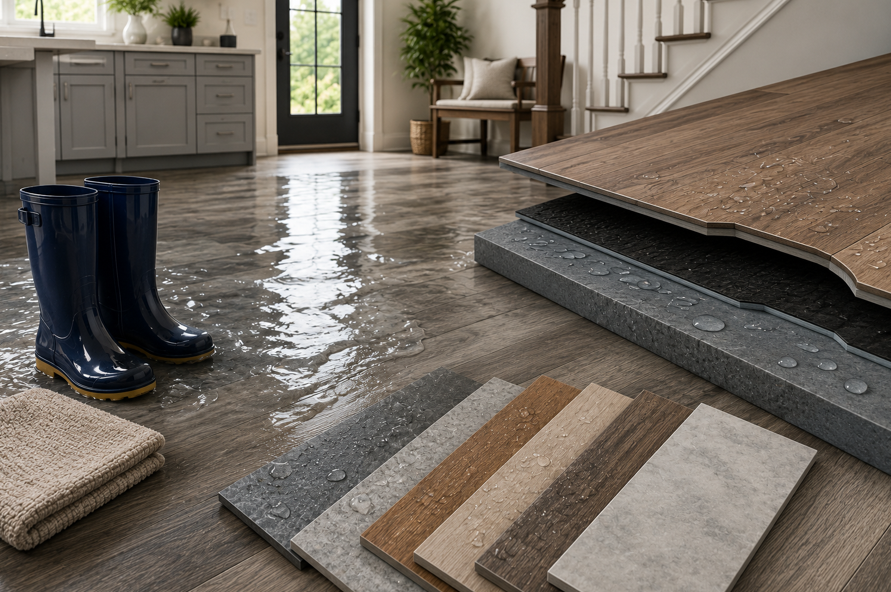
Why Water-Ready Flooring Matters in Selma Homes
Summer storms can bring heavy rain, wind-driven water, plumbing backups, wet shoes, muddy pets, and moisture tracked through busy entryways. Even when a home never experiences major flooding, repeated water exposure can wear down flooring that was not designed for it.
That makes material selection especially important in kitchens, bathrooms, laundry rooms, mudrooms, basements, and other spaces where spills or moisture are more likely.
At Prattville Carpet, our family-owned team helps Alabama homeowners compare beautiful flooring options based on the room, subfloor, household routine, and level of moisture exposure. The goal is not to promise that any floor can prevent water damage. It is to choose a surface that offers practical protection, easier cleanup, and reliable everyday performance.
Several flooring categories are marketed as waterproof, but they do not all respond to water in the same way. The surface, seams, perimeter, underlayment, subfloor, and installation method all influence the result. Understanding those differences helps Selma homeowners choose with confidence rather than relying on a label alone.
What Does “Flood-Resistant Flooring” Really Mean?
Flood-resistant flooring is designed to tolerate water exposure better than moisture-sensitive materials. It may resist swelling, staining, warping, or surface breakdown when spills are cleaned promptly or when a limited water event occurs.
That does not mean the entire flooring system is floodproof.
Water can move through expansion gaps, wall edges, transitions, floor vents, damaged grout, or openings around cabinets and plumbing. It may become trapped beneath a surface that looks unaffected from above. Once moisture reaches the subfloor, baseboards, drywall, or wall cavities, further drying and repair may be needed.
A practical way to evaluate a floor is to ask:
Is the surface material itself waterproof?
Are the seams and edges designed to limit water penetration?
What happens if water reaches beneath the floor?
These questions are more useful than relying on a single product description. Manufacturer warranties also vary, so homeowners benefit from reviewing approved rooms, exposure limits, installation instructions, and exclusions before making a decision.
Top Waterproof Flooring Options for Selma Homeowners
1. Luxury Vinyl Plank and Luxury Vinyl Tile
Luxury vinyl is a popular water-ready choice because the planks or tiles do not absorb water in the same way as natural wood or traditional laminate.
Luxury vinyl plank recreates hardwood, while luxury vinyl tile can resemble stone, ceramic, concrete, or patterned tile. Modern products may include realistic grain, beveled edges, matte finishes, and varied visuals.
It may be a strong fit for:
Kitchens
Bathrooms
Laundry rooms
Mudrooms
Finished basements
Family rooms
Pet-friendly homes
Luxury vinyl is easy to clean and comfortable underfoot. It can also feel more forgiving than hard tile in rooms where people stand for longer periods.
The vinyl material may be waterproof, but water can still move through seams or around the perimeter. Click-lock products depend on tight joints and correct installation. Glue-down products respond differently, but the adhesive and subfloor still need to match site conditions.
A flat, clean, dry subfloor is important. Product quality also varies by wear layer, core construction, scratch resistance, and warranty coverage.
2. Waterproof Laminate Flooring
Waterproof-rated laminate combines realistic wood visuals with improved protection against spills and surface moisture.
Traditional laminate uses a wood-based core that may swell when water reaches it. Waterproof laminate may include more protective construction, tighter locking systems, sealed edges, or other moisture-limiting features.
It can appeal to homeowners who want:
Detailed wood-inspired visuals
A firm feel underfoot
Strong scratch resistance
Easy routine cleaning
A broad range of colors and plank styles
It may work well in family rooms, hallways, bedrooms, home offices, and selected kitchens when the product is approved for those spaces.
“Waterproof” does not mean every laminate can tolerate unlimited standing water. Some warranties cover surface spills for a stated period, while others provide broader protection when installation requirements are followed. Bathrooms, laundry rooms, and lower-level spaces need careful product review.
3. Porcelain Tile
Porcelain tile is dense, durable, and highly resistant to water. It is often one of the strongest choices for rooms that regularly experience splashes, humidity, wet footwear, or repeated cleaning.
Porcelain is available in wood looks, stone looks, concrete styles, patterns, and large-format designs.
It can be especially suitable for:
Full bathrooms
Laundry areas
Entryways
Mudrooms
Kitchens
Sunrooms
Approved covered outdoor areas
The complete installation includes more than the tile. Grout joints, setting materials, membranes, movement joints, and the subfloor all affect performance. Grout is not always fully waterproof, and cracked grout or failed caulk can create paths for moisture.
Tile is also harder and cooler underfoot. Professional installation is valuable because porcelain can be challenging to cut, and a flat substrate helps prevent uneven edges.
4. Ceramic Tile
Ceramic tile offers broad design flexibility and can be a practical water-resistant choice for walls and selected floors.
Glazed ceramic has a protective surface that is easy to clean and available in many colors, shapes, and patterns. It may suit bathrooms, kitchens, laundry rooms, and decorative areas.
Not every ceramic tile is approved for floor use. Homeowners can confirm the product’s intended application, slip resistance, and durability rating.
Porcelain is generally denser and less absorbent than standard ceramic, which may make it a better choice for more demanding water exposure. Ceramic can still perform beautifully when matched to the right room and installed with suitable materials.
5. Sheet Vinyl
Sheet vinyl can be a practical option where homeowners want fewer seams and straightforward maintenance.
Because it is installed in large sections, it may reduce the number of joints where water can pass through. It is available in wood, stone, tile, and patterned visuals.
Sheet vinyl may suit:
Laundry rooms
Bathrooms
Kitchens
Utility spaces
Rental properties
Smaller rooms with simple layouts
The subfloor needs to be smooth because bumps, gaps, or debris may show through. Edge sealing and careful fitting are important around toilets, cabinets, doorways, and plumbing. If water gets beneath the sheet, it may remain trapped, so leaks still need prompt attention.
How the Main Waterproof Options Compare
Luxury vinyl offers design variety, comfort, and broad room flexibility. Waterproof laminate provides realistic wood visuals and a sturdy feel. Porcelain delivers excellent water resistance and durability. Ceramic offers versatile design for suitable applications. Sheet vinyl reduces seams and provides practical coverage.
Selma homeowners can explore our selection of waterproof flooring to compare styles, construction types, moisture features, and room recommendations.
The strongest choice depends on the room and the likely exposure. A bathroom with frequent splashes has different needs from a family room near an exterior door. A finished basement over concrete also requires different planning from an upstairs bedroom.
Which Rooms Benefit Most From Waterproof Flooring?
Kitchens
Kitchens face spills, appliance leaks, pet bowls, cleaning water, and heavy daily traffic. Luxury vinyl, waterproof laminate approved for kitchens, porcelain, ceramic, and sheet vinyl can all be considered.
Comfort underfoot, ease of cleaning, open-plan transitions, and the visibility of appliance leaks all matter.
Bathrooms
Bathrooms receive repeated water exposure around tubs, showers, sinks, and toilets. Porcelain and floor-rated ceramic are familiar options. Luxury vinyl and selected waterproof laminate products may also be suitable when approved by the manufacturer.
Slip resistance, edge sealing, toilet details, and doorway transitions deserve careful attention.
Laundry Rooms
Washing machines, utility sinks, and supply lines make laundry rooms a natural place for water-ready flooring. Tile, luxury vinyl, sheet vinyl, and approved waterproof laminate can provide practical performance.
The floor does not replace leak detection or appliance maintenance, but it may offer more time to respond to a small spill.
Entryways and Mudrooms
Wet shoes, umbrellas, muddy paws, and outdoor grit can wear down an entry floor. Durable waterproof materials make cleanup easier and reduce concern about repeated surface moisture.
A textured finish can improve traction and make everyday debris less noticeable.
Finished Basements and Lower-Level Spaces
Concrete slabs and below-grade spaces need a flooring plan that considers moisture from above and below. Luxury vinyl and selected tile systems are often considered because their surface materials respond well to water.
Moisture testing, vapor protection, drainage history, and slab condition matter. A waterproof surface does not correct an active foundation or groundwater problem.
Factors to Compare Before Choosing a Product
Surface Water Resistance
Ask how the material reacts to spills, wet cleaning, pet accidents, and standing water. Review the manufacturer’s definition instead of assuming all waterproof labels mean the same thing.
Seams and Perimeter Protection
Tight locking joints, correct adhesive coverage, sealed edges, grout condition, and transitions influence how quickly water reaches beneath the surface.
Subfloor Compatibility
Concrete, plywood, existing tile, and other surfaces have different preparation needs. The subfloor may require leveling, moisture testing, repair, or a compatible underlayment.
Slip Resistance
A glossy floor may become slick when wet. Texture and finish matter in bathrooms, kitchens, laundry rooms, and entries.
Scratch and Dent Resistance
Water protection is only one part of performance. Pet claws, furniture, shoes, and dropped objects also affect the floor. Compare wear layers, hardness, finish texture, and product ratings.
Comfort, Sound, and Cleaning
Tile is firm and cool. Luxury vinyl and sheet vinyl may feel softer and quieter. Laminate provides a solid feel but may need suitable underlayment for sound control.
Choose a product that fits the household’s cleaning routine. Waterproof does not mean every cleaner or method is safe. Steam, abrasive pads, wax, and harsh chemicals may affect some surfaces or warranties.
Design Continuity
Open floor plans often benefit from a product that can flow across several rooms. Consider how the new floor meets existing hardwood, carpet, tile, cabinets, stairs, and exterior doors.
Installation Details That Improve Water Performance
Even a high-quality waterproof product depends on careful installation.
Important details include:
Moisture testing where required
A flat and stable subfloor
Product acclimation when specified
Correct expansion spacing
Tight, undamaged locking joints
Approved adhesives and underlayments
Proper grout and movement joints
Finished transitions at doors
Careful sealing around plumbing
Manufacturer-approved perimeter treatments
Skipping preparation may reduce performance and affect warranty coverage.
Professional measurement helps identify unusual room shapes, damaged subfloor areas, elevation changes, and transitions before materials are ordered. This makes it easier to plan both appearance and performance.
What to Do After a Major Spill or Water Event
Begin by stopping the water source when it is safe to do so. Remove surface water promptly with towels, a wet vacuum, or suitable extraction equipment.
Move rugs, furniture, and stored items away from the area. Increase airflow and drying where appropriate. Avoid assuming the floor is dry simply because the surface looks normal.
Water may collect under floating planks, sheet goods, baseboards, cabinets, or appliances. A flooring professional or qualified water-remediation provider can help determine whether sections need to be lifted, dried, cleaned, or replaced.
Electrical hazards, contaminated water, structural concerns, and extensive flooding require qualified professional help. Flooring decisions come after the area is safe and the moisture source has been addressed.
Keep product information and leftover material when possible. Matching a discontinued color or production run can be challenging during future repairs.
Protecting Waterproof Floors During Everyday Life
Water-ready flooring still benefits from simple care.
Wipe up spills when they occur.
Place mats near exterior doors and sinks.
Check appliance supply lines regularly.
Use trays beneath pet bowls and indoor plants.
Keep grout, caulk, and transitions in good condition.
Use felt pads under furniture.
Follow the manufacturer’s cleaning instructions.
Avoid dragging heavy items.
Keep spare planks or tiles for future repairs.
These habits support the complete flooring system, including seams, edges, and the subfloor beneath it.
Choose Protection That Fits Your Selma Home
Flood-resistant flooring is not one universal product. It is a combination of suitable material, thoughtful room planning, proper preparation, and professional installation.
Luxury vinyl offers comfort and versatile style. Waterproof laminate delivers detailed wood-inspired visuals. Porcelain and ceramic tile provide durable, water-ready surfaces for demanding rooms. Sheet vinyl offers practical coverage with fewer seams.
The best choice depends on the source of moisture, room use, subfloor, household traffic, comfort preferences, and design goals. Homeowners also benefit from reading the exact warranty and understanding what the manufacturer considers normal spills, standing water, or a flood event.
Prattville Carpet brings more than 75 years of combined flooring experience to local projects. Our knowledgeable consultants help customers compare quality products, and our in-house installation teams focus on dependable workmanship and a polished finished result.
Ready to find a water-ready floor for your Selma home? Reach out to us for personalized guidance and a professional in-home estimate.


