

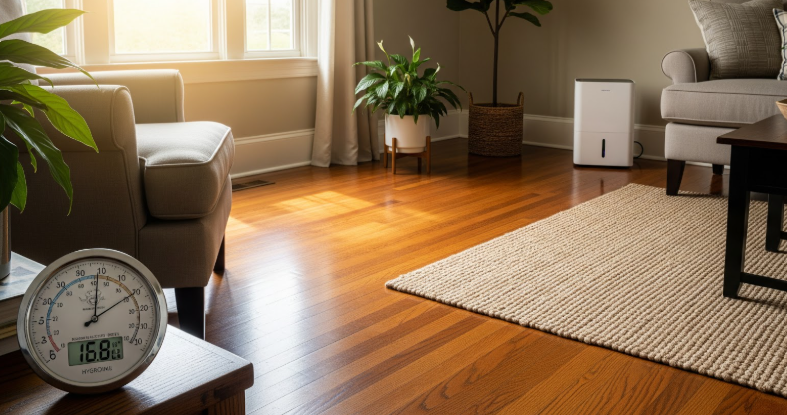
UNDERSTANDING HOW AUBURN’S HUMIDITY AFFECTS HARDWOOD FLOORS
Auburn’s warm, humid climate brings charm to the region, but it also places real pressure on hardwood floors. When moisture levels rise — especially during spring and summer — hardwood naturally absorbs that moisture, causing boards to swell. When the air dries out again, the boards shrink. This constant expansion and contraction can create gaps, cupping, crowning or long-term surface damage.
Homes in Auburn experience significant indoor humidity shifts throughout the year. Everyday activities such as cooking, showering and drying clothes indoors can raise moisture levels even further. Add in doors opening to the outdoors, tightly sealed modern homes and inconsistent temperature control, and hardwood floors can begin to show signs of stress sooner than expected.
Hardwood is an investment, so understanding how to protect it from humidity makes a big difference to how long it lasts. You want a floor that stays smooth, stable and beautiful in every season, no matter what the climate is doing outside. Local flooring teams such as Prattville Carpet are familiar with Auburn’s environment, and the goal here is to make sure your hardwood stays in excellent condition for years.
Humidity protection starts with knowledge — but it continues with the daily habits and smart decisions that keep hardwood healthy all year round.
WHY HUMIDITY IS THE MAIN THREAT TO HARDWOOD FLOORS
Hardwood performs beautifully in Southern homes, but it reacts strongly to moisture in the air. Wood fibres expand when humidity rises and contract when it drops. This movement is natural, yet excessive changes in Auburn’s climate can accelerate wear and distort the shape of the boards.
High indoor humidity can lead to:
• Cupping, where the sides of boards lift higher than the centre
• Crowning, where the centre rises due to moisture imbalances
• Warping or buckling, when boards push against one another
• Gaps, created when dry air causes shrinking
• Surface dullness, from moisture settling into the finish
Auburn’s conditions fluctuate throughout the year, so floors often face more moisture variation than hardwood in cooler climates. Kitchens, bathrooms, basements and entryways are especially vulnerable, but even living rooms and bedrooms can be affected during humid months.
Hardwood isn’t fragile — it simply needs a stable environment. Protecting it from humidity preserves its shape, beauty and lifespan while reducing the risk of expensive repairs in the future.
BEST TYPES OF HARDWOOD FOR HUMID ENVIRONMENTS
Choosing the right hardwood type can make a noticeable difference in how well your floors handle Auburn’s climate. Some wood species and constructions offer naturally better humidity resistance.
Engineered Hardwood
Engineered hardwood is one of the most climate-stable flooring options. Its layered construction reduces the risk of expansion and contraction while still providing the beauty of real wood. This makes it an ideal choice for homes in humid areas or for rooms where moisture levels fluctuate.
Dense Wood Species
Species like oak, hickory and maple handle humidity better than softer woods. Their dense fibres react less dramatically to moisture, meaning fewer issues with cupping or warping.
Floors With Durable Finishes
A strong finish adds a layer of protection that helps hardwood resist moisture. Matte and satin finishes tend to hide small imperfections, while high-quality sealants give the surface better durability against humidity-related changes.
Wide vs. Narrow Planks
Narrower planks often show less noticeable movement than wide planks in humid climates. For homeowners wanting wide-plank looks, engineered construction is the smarter choice.
The right hardwood can significantly reduce climate-related maintenance — and in Auburn’s environment, that advantage is worth considering.
HOW TO CONTROL INDOOR HUMIDITY TO PROTECT HARDWOOD
Humidity control is the foundation of long-term hardwood protection. Balancing indoor moisture levels is one of the easiest and most effective ways to prevent warping, cupping or gaps.
Use a Dehumidifier in Humid Months
During Auburn’s hot, humid seasons, a dehumidifier helps keep indoor moisture levels stable. Placing one in areas where hardwood is installed prevents boards from absorbing too much moisture.
Maintain Indoor Humidity Between 35% and 55%
This is the ideal range for hardwood floors. Above 55%, expansion begins. Below 35%, shrinking and gaps can occur. A hygrometer makes monitoring levels simple.
Run the Air Conditioner Regularly
Air conditioning naturally removes moisture from the air. During humid months, using it consistently can help maintain stable conditions indoors.
Ensure Good Ventilation
Bathrooms, kitchens and laundry rooms produce the most indoor humidity. Use exhaust fans to keep local moisture from drifting into areas with hardwood flooring.
Avoid Large Temperature Swings
Sudden temperature shifts can cause wood fibres to react quickly. Keeping your home at a steady temperature helps the floors adjust gently.
These small habits make a big difference — hardwood responds best when humidity remains stable day after day.
DAILY HABITS THAT HELP PROTECT HARDWOOD FROM HUMIDITY
Humidity protection doesn’t require complicated maintenance routines. Simple daily habits help maintain the condition and stability of hardwood floors.
Use Mats at Entryways
Moisture, rainwater and humidity cling to shoes. Mats reduce the chances of excess moisture settling on hardwood near doors.
Wipe Up Spills Quickly
Even minor spills can seep between boards if left too long. A quick wipe prevents this moisture from causing swelling.
Avoid Wet Mopping
Too much water during cleaning can seep into the seams. Choose a barely damp microfibre mop instead.
Keep Curtains or Blinds Closed During Certain Hours
Sunlight can heat the floor and increase surface expansion. Controlling sunlight helps maintain balance.
Maintain Proper Indoor Air Circulation
Ceiling fans and floor fans reduce stagnant moisture and keep air moving — ideal for reducing humidity pockets.
These habits become second nature and go a long way in keeping hardwood protected in Auburn’s climate.
ROOM-BY-ROOM TIPS FOR HUMIDITY MANAGEMENT
Different areas of the home face humidity in different ways. Tailoring your approach helps keep each room’s hardwood stable.
Living Rooms and Bedrooms
These spaces typically have balanced humidity but can be affected by seasonal shifts. Running an AC unit or dehumidifier during humid months keeps these rooms within the ideal range.
Kitchens and Dining Areas
Cooking releases moisture into the air. Using exhaust fans and improving airflow helps keep humidity from spreading to hardwood-adjacent rooms.
Bathrooms
Even if the bathroom doesn't have hardwood, humidity from showers can travel through hallways. Keeping doors closed and fans running reduces moisture migration.
Entryways and Mudrooms
These areas face wet shoes, umbrellas and sudden humidity changes from opening and closing doors. Floor mats, quick clean-ups and good ventilation are essential.
Basements
Basements naturally hold more humidity. If hardwood is installed above a basement, controlling lower-level humidity stabilises the temperature and moisture of the rooms above.
Understanding each space’s moisture behaviour helps the entire home remain hardwood-safe.
SEALANTS, FINISHES AND PRODUCTS THAT HELP PROTECT HARDWOOD
Protective finishes and sealants add a physical barrier against moisture, helping hardwood better tolerate Auburn’s environmental conditions.
Polyurethane Finishes
Oil-based and water-based polyurethane finishes offer strong moisture protection. They reduce surface-level absorption and add long-term durability to the floors.
Moisture-Resistant Sealants
Sealing all edges and seams helps prevent humidity from penetrating the weaker points of the flooring. This is particularly helpful in kitchens and entryways.
Refinishing Every Few Years
Refinishing restores the protective surface and allows homeowners to address any early signs of humidity damage before they worsen.
Choosing Climate-Ready Underlayment
Underlayment with moisture barriers helps stabilise the floor from below, offering added security during humid months.
A combination of good finishing products and the right installation approach can dramatically reduce long-term issues.
WHEN PROFESSIONAL HELP IS NECESSARY
Sometimes humidity damage starts small but requires professional care to avoid worsening. It can be helpful to consult an expert when:
• Floors show new or spreading gaps
• Several boards appear cupped or crowned
• Movement continues despite humidity control
• You’re unsure whether resurfacing or replacement is needed
• Moisture issues come from beneath the flooring
Local experts understand Auburn’s climate and can quickly identify if your hardwood needs repair, refinishing or environmental adjustments.
PROTECTING YOUR HARDWOOD FLOORS YEAR-ROUND IN AUBURN
Hardwood floors bring incredible warmth and charm to Auburn homes, and with the right care, they can last beautifully for decades. By understanding how humidity affects wood and taking steps to control indoor moisture, you can protect your investment and keep your home looking its best through every season.
If you’d like to explore durable hardwood options designed to withstand Auburn’s climate, you can view a curated range of choices through hardwood flooring. And when you’re ready for personalised guidance or an in-home consultation, feel free to reach out to us for friendly local support.


