

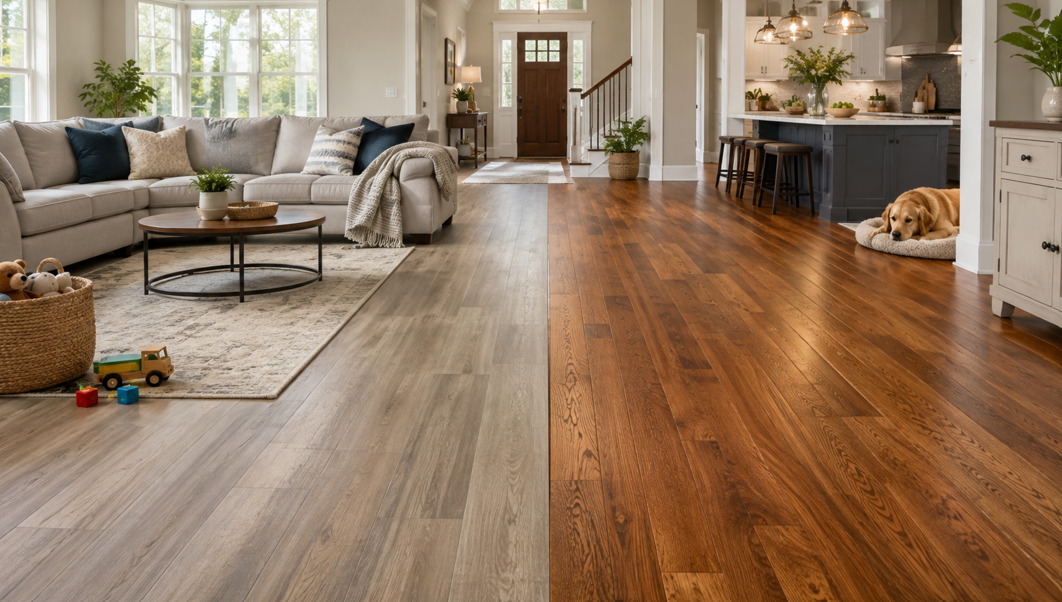
Finding the Right Floor for Real Family Life
Choosing flooring for a busy family home is about more than finding a style you like. The floor has to work with everyday life: kids running through the house, pets moving from room to room, school bags dropped near the door, snack spills, muddy shoes, furniture shifts, and all the normal activity that comes with a full household.
For Hoover, AL families comparing laminate and hardwood, both options have real strengths. Laminate is known for practical durability, easy maintenance, and a broad range of wood-look designs. Hardwood brings natural character, long-term value, and the ability to be renewed over time. The better fit depends on how your family lives, which rooms you are updating, how much maintenance you are comfortable with, and what kind of long-term value matters most.
At Prattville Carpet, families can compare flooring choices with help from a local team that understands the demands of homes across central Alabama. This guide breaks down laminate and hardwood in the areas that matter most to families, from scratch resistance and cleaning to comfort, style, moisture, pets, and long-term ownership.
Durability in a Busy Family Home
Durability is usually near the top of the list for families. Floors in hallways, kitchens, living rooms, playrooms, and entryways can take a lot of daily wear, so the surface needs to be ready for constant movement.
Why Laminate Performs Well Under Daily Wear
Laminate flooring is made with multiple layers, including a protective wear layer over a printed design. That top layer helps the floor stand up to everyday scuffs, foot traffic, and light scratching.
For families with active children, this can be a major benefit. Toy wheels, shoes, chair legs, and normal household movement are less likely to leave visible marks on a durable laminate surface than on some softer wood species.
Modern laminate also comes in different durability ratings and constructions. That means families can choose products designed for heavier residential use rather than treating all laminate as the same.
Still, laminate is not indestructible. Heavy impacts can damage edges, and deep gouges usually cannot be sanded away. If a plank is badly damaged, replacement may be the best option.
How Hardwood Handles Wear Over Time
Hardwood ages differently. Because it is real wood, it can show scratches, dents, and surface changes as the years pass. Some homeowners view those changes as character, while others prefer a more consistent appearance.
The advantage is that many hardwood floors can be refinished, depending on the product and the thickness of the wear surface. That can give hardwood a much longer renewal cycle than laminate.
For families planning to stay in the same home for many years, that ability to refresh the floor can be valuable. A hardwood floor may show more wear in the short term, but it can often be restored in ways laminate cannot.
Scratch Resistance Around Kids and Pets
Families with pets or younger children often worry about scratches before anything else. A floor can be beautiful on installation day, but the real test comes once daily life begins.
Laminate Often Has the Advantage for Surface Scratches
Quality laminate is a strong choice for resisting light surface scratches because of its protective wear layer. Dog nails, toy cars, chair movement, and everyday foot traffic are less likely to leave visible marks on many laminate products.
This makes laminate especially appealing in family rooms, play areas, and hallways where activity is constant.
Regular care still matters. Dirt and grit tracked in from outside can act like sandpaper under shoes or furniture. Entry mats, felt pads under furniture, and routine sweeping can help keep the surface looking polished.
Hardwood Depends on Species and Finish
Hardwood performance varies by species, finish, and plank construction. Harder wood species generally resist denting better than softer ones, while certain finishes can help reduce the visibility of small scratches.
Families with pets may also prefer lower-sheen finishes because they can make minor marks less noticeable than very glossy surfaces.
The important difference is that hardwood can often be repaired or refinished later. Laminate may offer better day-to-day scratch resistance, while hardwood can offer more options for long-term restoration.
Moisture, Spills, and Alabama Humidity
Moisture deserves careful attention in Hoover homes. Alabama humidity, wet shoes, pet bowls, kitchen spills, and everyday accidents can all affect flooring performance.
What Families Need to Know About Laminate and Water
Laminate has improved significantly over the years. Many current products offer better water resistance through tighter locking systems, treated edges, and moisture-resistant surfaces.
That makes laminate more practical for busy homes than older generations of the product.
However, water-resistant laminate is not automatically waterproof. If moisture reaches the seams or sits on the floor for too long, some products can still swell or become damaged.
When comparing laminate flooring, families should look closely at the specific product warranty, water-resistance claims, and recommended installation areas rather than assuming every laminate option performs the same way.
Hardwood Needs Faster Cleanup
Real wood naturally reacts to moisture. Excess water can lead to swelling, cupping, staining, or movement between boards.
That does not mean hardwood is a poor choice for Hoover homes. It simply works best when spills are cleaned promptly and indoor humidity is kept reasonably stable.
Hardwood is often a particularly strong fit for living rooms, dining rooms, bedrooms, and other spaces where standing water is less likely.
For kitchens, entryways, and other areas where spills happen more often, families may want to compare engineered hardwood, laminate, and waterproof flooring before making a final decision.
Maintenance: Which Floor Is Easier to Live With?
No family wants a floor that makes everyday cleaning feel like a project. Fortunately, both laminate and hardwood can be manageable with the right care routine.
Laminate Keeps Routine Cleaning Simple
Laminate is usually easy to maintain. Regular sweeping, vacuuming with an appropriate hard-floor setting, and occasional damp cleaning with a manufacturer-approved product are usually enough for routine care.
Because the surface is nonporous, crumbs, dust, pet hair, and most everyday dirt stay on top where they can be removed quickly.
The key is avoiding excessive water. Soaking the floor or using the wrong steam-cleaning method can damage some laminate products.
For families that want a low-maintenance surface without a lot of specialized care, laminate has a clear practical advantage.
Hardwood Benefits From Consistent Attention
Hardwood is also straightforward to clean, but it rewards a little more consistency.
Dust and grit can scratch the finish when they are repeatedly walked across, so regular sweeping or vacuuming helps protect the surface. Spills are best cleaned quickly, and area rugs can protect high-use zones.
Over time, hardwood may also need recoating or refinishing, depending on the level of wear.
That creates more maintenance than laminate, but it also gives hardwood an important advantage: homeowners can renew the surface rather than automatically replacing the floor.
Comfort and Sound in Family Spaces
How a floor feels and sounds can make a real difference in living rooms, bedrooms, upstairs spaces, and open-plan family areas.
Hardwood Has a Solid, Natural Feel
Hardwood has a substantial feel underfoot that many homeowners associate with a premium finish. Natural grain and variation give the floor warmth and character, especially in rooms where the flooring is a major visual feature.
Sound depends on the installation method, subfloor, room size, and furnishings. Rugs, curtains, and upholstered furniture can help soften noise in open spaces.
Laminate Comfort Depends on the Installation
Laminate is often installed as a floating floor over underlayment. The quality of the underlayment can influence both comfort and sound.
A good underlayment can make the floor feel more comfortable underfoot and reduce the hollow tapping sound sometimes associated with floating floors.
This is one reason professional installation matters. The same flooring product can feel very different depending on subfloor preparation, underlayment, and installation quality.
Style: Natural Character or Greater Design Flexibility?
Both laminate and hardwood can create a beautiful home, but they do it in different ways.
Hardwood Offers Authentic Variation
Every hardwood plank has natural grain, tone, and variation. No two installations look exactly the same.
For homeowners who want authenticity, that is often hardwood’s biggest advantage. Species, stain color, plank width, surface texture, and finish can all change the final look.
Hardwood works across many design styles, including traditional, transitional, modern, and farmhouse interiors. It can also age gracefully, with small changes becoming part of the floor’s character.
Laminate Offers More Visual Consistency
Laminate uses high-resolution printing and surface texture to recreate the appearance of wood. Current designs can closely mimic oak, hickory, maple, and other popular looks.
For families who want a particular color or pattern without the natural variation of hardwood, laminate can be easier to control visually.
It also offers a wide selection of finishes at different price points, which makes it easier to coordinate the floor with cabinets, paint colors, and furniture.
If the goal is a stylish wood look with practical everyday performance, laminate can be a very strong choice.
Cost and Long-Term Value
Price matters, but the best flooring decision is not always the one with the lowest initial cost. Families also need to think about lifespan, maintenance, repair options, and how long they plan to stay in the home.
Laminate Usually Costs Less Upfront
Laminate is generally more affordable to purchase and install than hardwood. That can be especially helpful when updating a large area or several rooms at once.
The value comes from getting an attractive, durable surface without making the larger initial investment often associated with real wood.
However, laminate has a more limited repair path. If the surface is badly damaged, replacing individual planks or eventually replacing the floor may be the practical solution.
Hardwood Can Deliver Longer-Term Value
Hardwood usually requires a higher upfront investment, but it can last for decades when properly installed and maintained.
The ability to refinish many hardwood floors gives them an advantage over time. Rather than replacing the entire floor when the finish becomes worn, homeowners may be able to restore it.
For families planning to remain in the home long term, that can make hardwood a compelling investment.
For families focused on immediate value, easier care, and a faster update, laminate may make more sense.
Installation and What Families Can Expect
Installation affects more than appearance. It influences comfort, sound, stability, and long-term performance.
Laminate Installation Can Be Efficient
Many laminate products use click-lock systems and floating installation methods. That can make installation relatively efficient when the subfloor is in good condition.
Even so, preparation still matters. The subfloor needs to be flat, dry, clean, and appropriate for the flooring system. Expansion spacing is also important because flooring materials respond to changes in indoor conditions.
Professional installation can help make sure these details are handled correctly.
Hardwood Installation Can Require More Preparation
Hardwood installation varies depending on whether the product is solid or engineered and whether it is nailed, stapled, glued, or floated.
Acclimation, moisture levels, subfloor type, and expansion requirements all need attention. These details are especially important in a humid climate.
A knowledgeable flooring team can help families choose a product and installation method that fits the room, the subfloor, and the way the space will be used.
Which Is Better for Homes With Children?
For homes with younger children, laminate often wins on practicality.
Think about a normal week: cereal spills, craft projects, toy cars, school shoes, friends coming over, and furniture being moved around. A durable laminate surface is designed to cope with that kind of activity while keeping maintenance simple.
Hardwood can still be an excellent family floor. Its natural beauty and long-term value are hard to match, and small signs of use can become part of the character of the home.
Families who choose hardwood may want to use rugs in play areas, protective pads under furniture, and a consistent cleaning routine.
The better choice depends on expectations. If you want a surface that stays visually consistent with minimal attention, laminate may suit your household better. If you value natural materials and are comfortable with gradual signs of wear, hardwood may be more rewarding.
Which Is Better for Homes With Pets?
Pets introduce a different set of flooring concerns: scratches, traction, shedding, water bowls, and occasional accidents.
Laminate is often appealing for dog owners because its wear layer can handle light scratching and its surface is easy to clean.
Texture matters too. Very smooth flooring can feel slippery under paws, so families may prefer a laminate with a more textured surface.
Hardwood can also work beautifully in pet-friendly homes. A harder species and a lower-sheen finish can help reduce the appearance of small marks.
Keeping nails trimmed, using mats near exterior doors, and cleaning accidents promptly can help protect either type of floor.
For households where water exposure is frequent, it may also be worth comparing laminate and hardwood with waterproof flooring before making a final decision.
A Simple Decision Guide for Hoover Families
Choose laminate if your priorities include:
Strong everyday scratch resistance
Easy routine cleaning
A more accessible upfront investment
Consistent wood-look designs
Practical performance in high-traffic family spaces
Choose hardwood if your priorities include:
Real wood character
Long-term beauty
The possibility of refinishing
A natural material underfoot
A floor that can remain part of the home for many years
Neither option is automatically better. The best choice is the one that matches your household’s routines, your preferred look, and your long-term plans.
Making the Right Choice for Your Hoover Home
Laminate and hardwood can both work beautifully for families in Hoover, AL. They simply solve different problems.
Laminate stands out for practical durability, easy care, design flexibility, and a lower starting cost. Hardwood offers natural beauty, long-term character, and the ability to be renewed over time.
If your home is busy, pet-friendly, and full of everyday activity, laminate may provide the simplicity you want. If you are planning for the long term and value genuine wood, hardwood may be worth the additional investment.
The most useful next step is to compare samples in person. Color, texture, plank width, and finish can look very different under real lighting than they do on a screen.
When you are ready to compare options for your home, get in touch with Prattville Carpet for personalized guidance and a professional in-home flooring estimate.


