

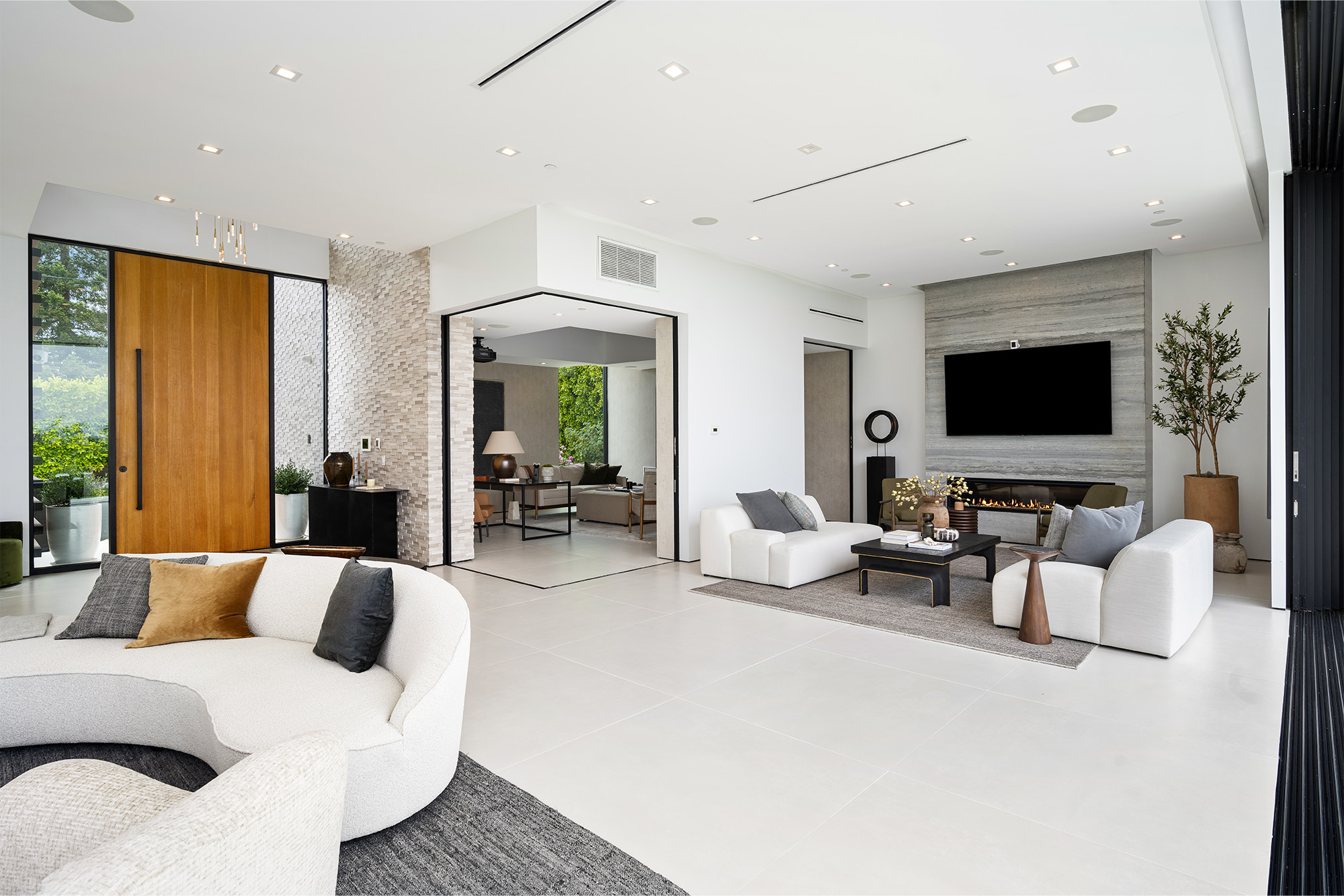
When you walk into a spacious, open-concept living area, few design choices make a bolder statement than large format tile. Whether you choose sleek porcelain planks from Marazzi Tile, natural stone looks from MSI, or refined ceramic slabs from Chesapeake Tile, these expansive tiles create a modern, uninterrupted visual flow. However, expansive living rooms and grand entryways also magnify installation imperfections. The single most common issue that can ruin your new floor is lippage.
At Prattville Carpet, our father-and-son team of Ronny Boles and Ray Boles brings over 75 years of combined flooring experience to your home. We know that installing large tiles requires precision engineering from the subfloor up. If you are planning an upgrade in Prattville, Montgomery, Millbrook, Wetumpka, or Pike Road, AL, here is everything you need to know about subfloor flatness and how our in-house installation team eliminates lippage before it ever starts.
What Is Tile Lippage and Why Does It Happen?
Tile lippage refers to a condition where one edge or corner of an installed tile sits higher than the adjacent tile. This height difference creates an uneven, stepped transition across the grout line. In minor cases, lippage casts distracting shadows across your floor under natural sunlight. In severe cases, it creates an uncomfortable walking surface that can chip easily, catch chair legs, or present a serious tripping hazard for your family and guests.
The True Definition of Lippage Under TCNA Standards
According to the Tile Council of North America (TCNA) and ANSI A108.02 standards, lippage is defined as the variation in height between adjoining tiles. The standard allows for a slight tolerance, usually around 1/32 of an inch, plus any inherent warpage of the tile itself. Any edge variation that exceeds this threshold is considered unacceptable craftsmanship. Because light streams across large living rooms from expansive windows and patio doors, even a tiny fraction of an inch of height difference becomes instantly visible.
Why Large Format Tiles Are Prone to Edge Height Differences
Any tile with at least one edge measuring 15 inches or longer is classified as a large format tile. Popular dimensions include 12x24, 24x24, and 24x48 inches. While these dimensions minimize grout lines, they present unique structural challenges.
During the manufacturing firing process, large porcelain and ceramic tiles naturally develop a slight inherent crown, meaning the center of the tile is marginally higher than the outer edges. When you lay smaller tiles, this minor curvature is negligible. With large format tiles, however, placing the low corner of one tile next to the high midpoint of an adjacent tile naturally exaggerates edge height differences unless your installer uses specialized setting techniques.
Why Subfloor Flatness Is Essential for Large Living Areas
The golden rule of tile installation is simple: your finished floor is only as flat as the foundation beneath it. Tile has zero flexibility. While smaller mosaic tiles can gently roll over subtle dips and humps in a subfloor, large format tiles bridge those variations like rigid planks. If your subfloor has a valley or a ridge, your tile cannot bend to meet it.
The 1/8-Inch in 10-Foot Flatness Rule
Industry standards dictate that for large format tiles, the substrate must not vary by more than 1/8 of an inch over a 10-foot span. For reference, traditional smaller tiles only require a tolerance of 1/4 inch in 10 feet. When you double the flatness requirement, standard framing and slab pours rarely pass inspection without dedicated floor preparation.
Before we set a single tile in your home, our team inspects your entire surface using a precision 10-foot straightedge. We locate every high spot that requires grinding and every low spot that demands a self-leveling underlayment or specialized patching compound. Skipping this step is the primary reason big-box installations fail.
Alabama Concrete Slabs, Crawlspaces, and Red Clay Factors
Living in Central Alabama presents specific environmental conditions that directly influence subfloor stability.
First, many living rooms in Montgomery and Prattville sit directly on concrete slabs. Concrete slabs often have curling joints, birdbaths (low dips), and high trowel ridges from the initial pour. Furthermore, high seasonal humidity and heavy rainfall saturate our local soil, causing moisture vapor to migrate through unsealed slabs.
Second, homes in Millbrook, Wetumpka, and Pike Road frequently feature raised foundations over crawlspaces. In these structures, wood subfloors experience seasonal expansion and contraction as Alabama summer heat yields to winter humidity changes. Crawlspace joists must be rigid enough to prevent deflection (bouncing). If your subfloor flexes under foot traffic or shifts due to expansive red clay soil movement, the bond breaks, mortar cracks, and lippage becomes permanent. Our team evaluates your foundation type and installs appropriate uncoupling membranes to isolate your tile from subfloor movement.
Best Installation Methods to Prevent Tile Lippage
Preventing lippage requires a comprehensive system combining premium materials, proper geometry, and specialized mechanical tools.
Use the Right Large and Heavy Tile Mortar
Standard thin-set mortar shrinks as its water content evaporates during curing. When you place a heavy tile into standard mortar, the weight compresses the wet paste unevenly, pulling tiles down at different rates and creating overnight lippage.
We use premium Large and Heavy Tile (LHT) polymer-modified mortars. These specialized non-slumping mortars hold their ridges without collapsing under heavy loads and cure without shrinkage, ensuring your tiles remain at the exact elevation we place them.
Back-Buttering and Proper Trowel Technique
Achieving 85% to 95% mortar coverage beneath every tile is required by code. To accomplish this, our installers comb mortar onto the subfloor in straight, parallel lines using a calibrated euro-notch or deep square-notch trowel. Swirling trowel marks trap pockets of air, preventing full transfer. In addition, we back-butter every tile by applying a flat skin-coat of fresh mortar directly to the back of the tile before setting it into position. This eliminates air voids, strengthens the bond, and creates a uniform bed.
Implement Mechanical Tile Leveling Systems
Mechanical leveling clips are essential for modern living room installations. These systems consist of heavy-duty interlocking clips that slide beneath the tile edges and adjustable wedges or rotating caps that lock into the top. As the wedge tightens, it applies constant, equal pressure across adjoining edges, pulling the lower tile upward while seating the higher tile firmly into the mortar bed. The clips hold every edge flush until the mortar achieves full cure.
Follow Proper Stagger and Offset Patterns
To minimize the impact of natural tile curvature, you must never install large rectangular tiles in a traditional 50% brick-joint pattern. Placing the high center of one tile directly next to the low corner of the adjoining tile guarantees noticeable lippage. We install large planks using a maximum 33% offset or a third-running bond. This alignment positions the highest point of the tile next to a relatively balanced section of the neighboring plank, producing a smooth surface.
Why In-House Installation Protects Your Investment
Many national retailers sell you tile and immediately outsource the labor to the lowest-bidding third-party subcontractor. Those crews often lack the specialized tools, time, and training required for large format layouts.
At Prattville Carpet, we do things differently. More than 75% of our business comes from repeat customers and referrals because we do not cut corners. Our own trusted, in-house installation teams manage your project from start to finish, backing every single square foot with our guaranteed workmanship. We take the time to test your subfloor, prep the surface, and calibrate every joint so you get flawless, long-lasting floors.
Visit our Prattville showroom in person, or have our Mobile Showroom bring curated samples and provide free room measurements right to your door. Our in-house team is ready to help you transform your space throughout Prattville, Montgomery, Millbrook, Wetumpka, and Pike Road, AL.


