

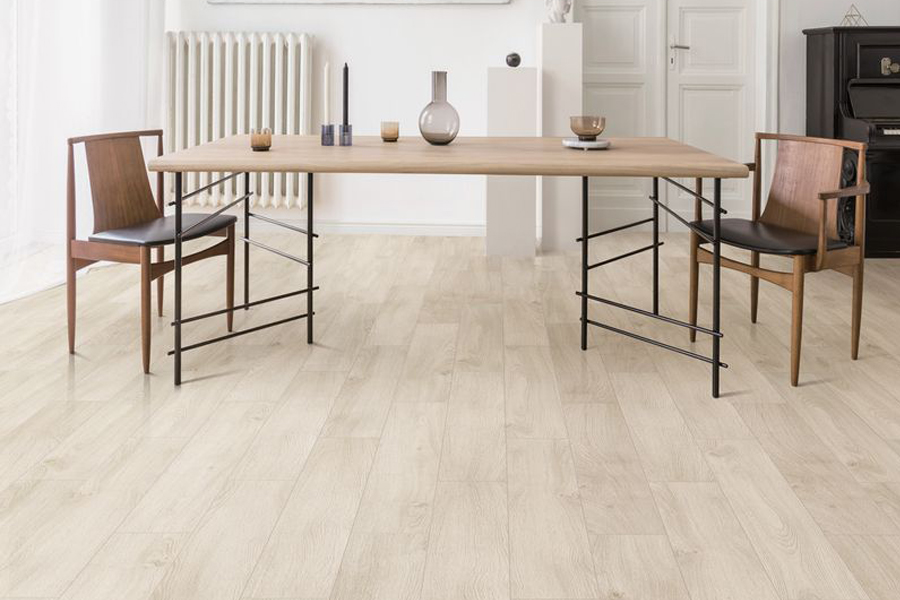
That sharp click-clack every time someone crosses the room can turn a beautiful laminate floor into a daily annoyance. The good news is that the sound is almost always fixable, and it is often preventable when you start with the right product. At Prattville Carpet, our flooring experts have spent over 75 years helping homeowners across Prattville, Montgomery, Millbrook, Wetumpka, and Pike Road choose floors that look great and feel solid underfoot. Here is how to pick quieter laminate and calm the floors you already have.
Why your laminate floor makes that click-clack sound
Laminate is a floating floor, which means the planks lock together and rest on top of the subfloor rather than being nailed or glued down. That design is part of what makes laminate so easy to live with, but it is also the reason it can talk back when you walk on it. When planks shift even slightly against a hard subfloor, you hear it.
The floating floor design
Because the floor floats, there is always a thin layer of air and cushioning between the planks and the surface below. When that cushioning is too thin, too hard, or missing in spots, the planks tap the subfloor and each other. The result is that hollow, snapping click-clack you notice most in quiet rooms.
Common causes of the noise
Most laminate noise traces back to a handful of culprits. An uneven subfloor leaves gaps where planks flex and drop with each step. A thin or low quality underlayment fails to absorb sound. Planks that were installed too tightly or too loosely can rub or shift. And in some cases, simple age and settling create hollow spots. The fix depends on the cause, so it helps to know what you are dealing with before you start.
How to choose quieter laminate flooring
If you are shopping for new floors, a few smart choices at the start will save you from noise later. You can explore the full range in our guide to laminate flooring, and here is what to keep in mind while you compare options.
Look for thicker planks
Plank thickness has a big effect on sound and feel. Thicker laminate, generally in the eight to twelve millimeter range, sits more solidly and flexes less underfoot. That extra body helps the floor feel like real wood and cuts down on the hollow tapping that thinner boards tend to produce.
Choose a quality core
The core is the heart of any laminate plank. A dense, high quality core resists flexing and holds its locking joints tightly over time, which keeps planks from shifting and clicking. Some homeowners also look at waterproof options with a stable core for kitchens and baths, and you can read more in our overview of waterproof flooring.
Pay attention to underlayment
Underlayment is the unsung hero of a quiet floor. A good foam or cork underlayment cushions each step, absorbs sound, and smooths out minor subfloor imperfections. When you compare products, ask about the sound ratings, often listed as IIC and STC. Higher numbers mean better sound control, which matters most in upstairs rooms and open living spaces.
Consider attached pad options
Many modern laminates come with a pad already attached to the underside of each plank. This is a convenient way to build in cushioning and quiet without a separate underlayment step. It is worth comparing attached pad products against a premium standalone underlayment to see which gives you the best sound performance for your rooms. Browse our current selection when you shop laminate flooring to see the choices side by side.
How to quiet laminate floors you already have
Already living with a noisy floor? You do not always have to start over. Depending on the cause, several steps can bring real relief, from quick fixes to a more thorough refresh.
Start with the subfloor. A level base is the foundation of a quiet floor. Uneven or dipping subfloors leave gaps that let planks flex and snap, so if the noise is concentrated in certain spots, an uneven base is a likely reason.
Upgrade the underlayment. If your floor sits over thin or worn underlayment, replacing it with a thicker, sound rated product can transform how the room feels and sounds. It is one of the most effective long term fixes.
Fill the gaps and hollow spots. Make sure expansion gaps are covered by trim and baseboards and that transition strips are secure. Hollow spots in the middle of a room usually point back to the subfloor.
Soften the room with rugs and pads. Area rugs with quality rug pads absorb sound and add warmth where you walk most, and felt pads under furniture legs stop scraping and reduce the sharp tap of chairs and tables.
When to bring in the flooring experts
If the click-clack is widespread, getting worse, or paired with movement underfoot, it is worth having a professional take a look. Persistent noise often signals a subfloor or installation issue that is far easier to solve correctly the first time. Proper installation is one of the biggest factors in how quiet and long lasting a laminate floor will be, which is why so many homeowners choose our team for flooring installation.
As a family owned flooring store, we make the whole process easy. With our shop at home service and free in-home measurement, we bring samples to you and measure your space so you can choose the right laminate for your rooms, your style, and your budget without the guesswork. When you are ready to talk through options, get in touch with our team and we will help you take the next step.
Your quiet laminate questions, answered
Why is my laminate floor so loud when I walk on it?
The most common reasons are an uneven subfloor, thin or worn underlayment, or planks that shift because of gaps or hollow spots. Because laminate floats over the surface below, any of these lets the planks tap and click. Identifying the cause is the key to picking the right fix.
Does thicker laminate reduce noise?
Yes. Thicker planks, typically eight to twelve millimeters, flex less and sit more solidly, so they produce less of that hollow tapping sound. Paired with a good underlayment, thicker laminate feels closer to real hardwood underfoot.
What underlayment is best for quiet laminate floors?
Look for a foam or cork underlayment with strong sound ratings, shown as IIC and STC numbers, where higher is better. The best choice depends on your subfloor and whether the room is upstairs, so it is worth asking our flooring experts for a recommendation based on your home.
Can I quiet my laminate floor without replacing it?
Often, yes. Area rugs, rug pads, and felt furniture pads reduce everyday noise quickly. Securing trim and transition strips helps too. If the noise is structural, though, addressing the subfloor or underlayment gives the most lasting result.
Is laminate louder than other flooring?
Laminate can be louder than glued or nailed floors because it floats, but the right thickness, core, and underlayment close much of that gap. Well chosen and properly installed laminate can be very quiet and comfortable to live with.
Ready to find laminate that looks beautiful and stays quiet? Our team at Prattville Carpet is here to guide you every step of the way, from samples in your living room to a dependable, professional install. Reach out today and let us help you love the way your floors sound and feel.


